
Can a solar generator supplement or replace a gas generator for camping?
The two are not really competitors. A gas generator is an energy source — give it fuel and it makes kilowatt-hours indefinitely. A so-called solar generator is a battery with an inverter on it: it is an energy store, and how much it gives you per day is set by how fast you can refill it. Once you frame it that way the decision gets easy.
The pairing that works
Use the battery for everything that runs quietly, continuously, and at modest power: the fridge, lights, fans, charging, a TV, a coffee maker in the morning. Those are the loads that make you run the generator for hours at low output, which is the worst thing you can do to it and the thing that annoys your neighbors. Start the gas unit only for the short, heavy jobs, and — if you have one — use it to bulk-charge the station in a single noisy hour rather than running all afternoon.
Sizing, honestly
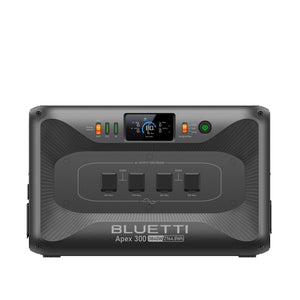
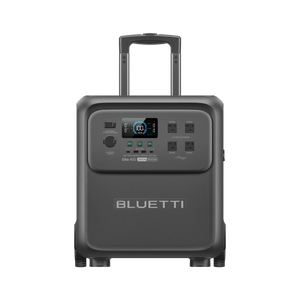
Work out your daily watt-hours first, then buy capacity that covers a full day and panels that can put that back. Our Apex 300 listing states 2,764.8Wh of LiFePO4 with 3,840W of AC output, and it expands by adding modules instead of replacing the unit: up to six B300K batteries per station, which our listing puts at 19,353.6Wh for one station and six batteries. The Elite 400 is the single-box alternative at 3,840Wh with 2,600W rated output, and our listing notes it has built-in wheels and handles because it weighs 85.98 lbs.
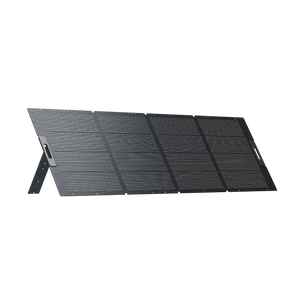
Panels are the part people under-buy. A folding 350W panel is realistic on a good day and much less in trees or haze. If your daily draw is 2kWh and you have 350W of panel, you are not replacing the generator — you are extending it.
Where the generator keeps its job
Rooftop air conditioning. It is a big load, it runs for hours, and it usually runs on the hottest, sometimes hazy days when you also want the most out of the panels. A station with a large enough inverter can start and run a modern RV air conditioner, but the runtime maths, not the surge rating, is what decides it — and for a full afternoon of cooling the honest answer for most rigs is still the engine, or shore power.
Extended bad weather is the other case. Snow, a week of rain or a shaded site turns a solar generator into a battery you cannot refill, and that is exactly when a fuel-burning unit is worth its noise.
What we stock
Genuine BLUETTI stations, expansion batteries and folding panels, shipped from Upland in 3–7 days and sold by RV Parts Giant in Upland, California, next to our Victron and Renogy solar parts for anyone going the fixed-install route instead.
Shop the parts in this guide
- BLUETTI Elite 300 + 350W Solar Panel Bundle 3,014Wh
- BLUETTI Elite 400 + 350W Solar Panel Bundle 3,840Wh
Free standard shipping to the contiguous U.S. on most items, free 30-day returns, and carries our lowest price guarantee — find it cheaper at an authorized U.S. seller and we will beat it.
What you need

Want the full walkthrough? Read the complete guide.