How do I stop moisture and mold under my RV or camper mattress?
If the top of the mattress is dry and the underside is damp or spotted, the water didn't come from you spilling something. Moisture from your body moves down through the foam. It meets a cold, sealed base, usually plywood or a storage lid, and condenses there. In a house, a slatted bed frame lets that moisture escape. On an RV platform it has nowhere to go.
Fix the gap, not the top
| Product | Where it goes | What it does |
|---|---|---|
| 3D air-mesh ventilation underlay | under the mattress, on the platform | 0.39 in honeycomb mesh holds the foam off the base so air and water can move; 4 corner elastic bands keep it in place |
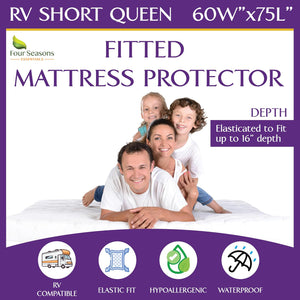
| Waterproof mattress protector (60 x 75 in short queen) | over the mattress, under the sheet | stops spills and sweat getting into the foam from above; breathable |
Only the underlay deals with condensation underneath. A protector is still worth having, but it is not the fix for a damp base. Some people zip the mattress into a waterproof cover all round, but that traps moisture on both sides.
Getting it to work
- Dry the mattress and the platform first. Stand the mattress on edge in the sun or a warm, dry room. Wipe the platform down and let it dry. If there is mold on the wood, clean it before you cover it.
- Lay the underlay flat across the whole platform and hook the corner bands round the platform or the mattress.
- Lift the mattress now and then on long stays in cold weather. Even with the mesh, it helps to prop it up for an hour so the base can air out.
- Rinse and air-dry the underlay when it needs cleaning. That is the care its listing gives. It folds into its own bag for storage.
The underlay adds only 0.39 in of height. It won't change how the bed feels or which sheets fit.
For floor beds
If someone sleeps on a cold floor, the 3 in waterproof full tri-fold has a TPU membrane on the bottom as well as the top, so damp from the floor stays out of the foam. Air it out flat after each trip.