
How much battery do I need to run Starlink in my RV all day?
The dish itself is only part of the number. A battery sized for Starlink alone will not run the rig around it, so our calculator adds the dish to the loads an RV already has and sizes the whole bank. The figures below are what it works out when you tick the Starlink options and leave everything else at its defaults: a 12V compressor fridge, lights, water pump, phone charging and vent fans, mixed sun at about five peak hours, and the rig parked rather than driving between camps.
What the calculator allows for each dish
| Starlink option, "on most of the day" | Daily allowance | Whole rig per day |
|---|---|---|
| None (fridge and basics only) | 0 | about 550Wh |
| Starlink Mini or a cell booster | about 256Wh | about 806Wh |
| Standard Starlink dish | about 576Wh | about 1,126Wh |
Those allowances work out to roughly eight hours at the dish's typical draw, which is the "most of the day" case rather than a dish left powered around the clock. If yours runs 24 hours, or you also work from a laptop, tick those too and the plan updates. Run your own numbers in our RV solar & battery calculator.
The battery and solar that covers it
The calculator sizes the bank on 85% usable LiFePO4 capacity and the array on a 75% solar harvest.
| Setup | Battery | Solar | Controller |
|---|---|---|---|
| Mini, 2 days parked | 150Ah | 250W | SmartSolar MPPT 100/30 |
| Standard dish, 1 day | 150Ah | 350W | SmartSolar MPPT 100/30 |
| Standard dish, 2 days | 250Ah | 350W | SmartSolar MPPT 100/30 |
| Standard dish, 3 days | 350Ah | 350W | SmartSolar MPPT 100/30 |
Two things stand out. First, the solar array does not grow with the number of days, because it only has to put back one day's use each day; the battery is what carries you through the second and third day. Second, the Standard dish is the one load on the list that changes the plan on its own. Adding a Mini leaves the Mini-and-fridge rig at the same 150Ah bank the fridge alone needed, with 100W more solar. Going to a Standard dish moves a two-day stay to a 250Ah bank and a three-day stay to 350Ah.
No inverter appears in any of these builds. Everything on the list runs on 12V, including the dish when it is fed from DC, and skipping the inverter also skips its idle draw. The parent guide covers the DC options for each dish and what an inverter costs you in standing losses.
The portable equivalents
If you would rather not wire the rig, the calculator names a power station that holds the same energy:
- Mini, 2 days: Jackery Explorer 2000 v2, 2,042Wh.
- Standard dish, 1 day: Renogy 2-in-1 Smart PowerMax, 1,280Wh, which also works as a 12V 100Ah house battery if you wire the rig later.
- Standard dish, 2 days: BLUETTI Apex 300, 2,764Wh, with expansion batteries available later.
- Standard dish, 3 days: BLUETTI Apex 300 with a B300K expansion battery, 5,529Wh.
Pair any of them with a folding panel to put the day's use back.
Checks before you buy
- Confirm which dish you have. Starlink's own figures put the Mini well under the Standard dish, and the calculator's two options are a long way apart in battery.
- Decide how many days you stay put. Two days is the default; a third day with a Standard dish is a 350Ah bank, which is two Victron LiFePO4 NG batteries in parallel in the calculator's parts list.
- Pick your sun honestly. Cloudy or winter camping at three peak hours raises the array; desert summer at six lowers it. Change that one setting and read the array size again.
- Fit a shunt-based battery monitor. The estimates above become your real numbers only once a SmartShunt is reading the bank.
What you need
-
 Victron LiFePO4 NG Lithium Battery | RV & Off-Grid Power Storage
$759.00
-
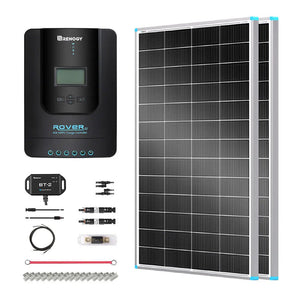 Renogy 400W 12V Starter Solar Panel Kit
$725.95
-
 Victron SmartSolar MPPT 100/30 & 100/50 | RV Solar Charge Controller
$127.35
-
 Jackery Explorer 2000 v2 Portable Power Station 2,042Wh 2,200W
$999.00
-
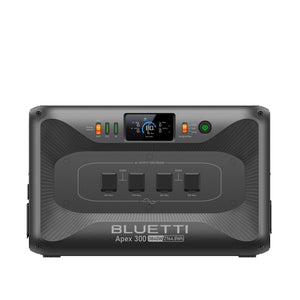 BLUETTI Apex 300 Portable Power Station | 3,840W, 2,764.8Wh Expandable (Pre-Order)
$1,449.00


Want the full walkthrough? Read the complete guide.